How to Unscramble Words Fast

How to Unscramble Words Fast — 7 Proven Tricks
Staring at a pile of jumbled letters and your brain goes blank? You are not alone. Whether you are playing Scrabble, solving a word jumble puzzle, or stuck on a daily word challenge — unscrambling words is a skill that anyone can learn. In this guide, you will discover 7 proven tricks that word game experts use to decode scrambled letters in seconds.
📌 In This Article
Why Is Unscrambling Words So Hard?
Our brains are trained to read words in a fixed order — left to right, in a familiar sequence. When letters are jumbled, your brain struggles to find patterns because it is looking for something that simply is not there in the right order. The good news? With the right strategies, you can train your brain to spot word patterns instantly — even in complete chaos.
These 7 tricks work for any word puzzle: Scrabble, Words With Friends, Wordle, daily jumbles, classroom word activities, and more. Let us dive in.
The Fast Method, Step by Step
- Separate the vowels (A, E, I, O, U) from the consonants to see the word’s skeleton.
- Look for a prefix (UN-, RE-, PRE-) or suffix (-ING, -ED, -LY, -TION) hiding in the letters and lock it in place.
- Spot digraphs and common letter patterns such as TH, SH, CH, QU and CK, and treat each pair as one unit.
- Build around the most common letters (E, T, A, O, I, N) and try a familiar word ending such as -ATE, -IGHT or -ACK.
- If you are still stuck after about 30 seconds, use the free word unscrambler to see every possible word, then study the answer.
Find the Vowels First
The very first thing expert unscramblers do is separate vowels (A, E, I, O, U) from consonants. Every English word needs at least one vowel, and vowels act as the skeleton around which consonants are arranged. By identifying your vowels first, you instantly narrow down the possible word structures.
For example, if you have the letters TAELP, pull out the vowels: A and E. Now you know the word has two vowels and three consonants. From there, try building structures like _A_E_ or _E_A_ — and PLATE or LEAPT will jump out at you much faster.
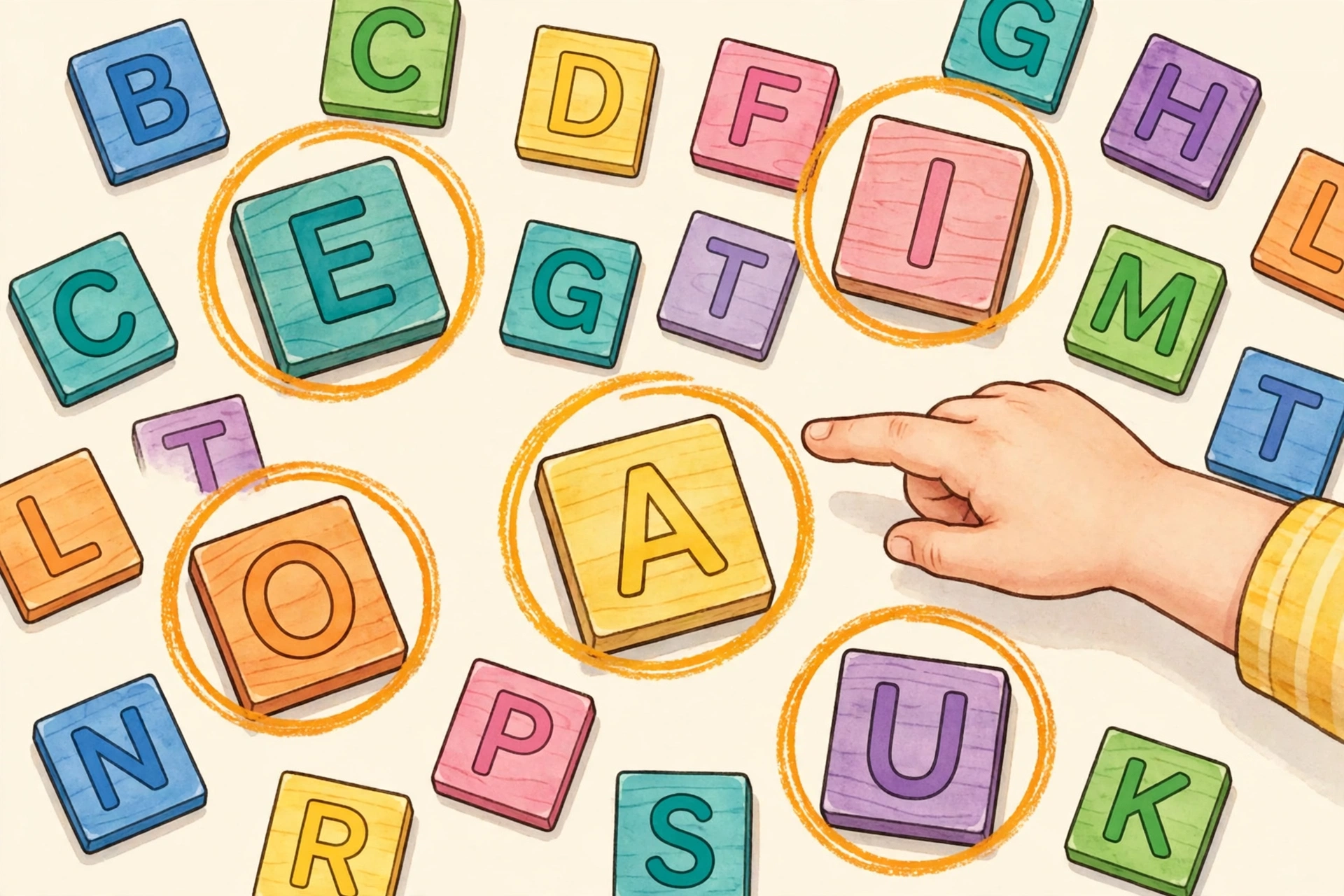
Separating vowels from consonants is the #1 technique used by word game experts.
Look for Prefixes and Suffixes
English words are built with building blocks — prefixes at the start and suffixes at the end. If you can spot a common prefix or suffix in your scrambled letters, you have already found a chunk of the word.
Common Prefixes to look for:
- UN- → UNDO, UNFIT, UNLOCK
- RE- → REDO, RETURN, REPAIR
- PRE- → PREVIEW, PRELOAD
- OUT- → OUTSIDE, OUTRUN
- DIS- → DISLIKE, DISMISS
Common Suffixes to look for:
- -ING → RUNNING, PLAYING
- -ED → JUMPED, PLAYED
- -LY → QUICKLY, SLOWLY
- -TION → NATION, MOTION
- -ER / -EST → FASTER, FASTEST
Prefixes and Suffixes at a Glance
| Part | Position | Example |
|---|---|---|
| UN- | Start | UNDO |
| RE- | Start | REDO |
| PRE- | Start | PREVIEW |
| -ING | End | RUNNING |
| -ED | End | JUMPED |
| -LY | End | QUICKLY |
| -TION | End | NATION |
| -ER | End | FASTER |

Prefixes and suffixes are hidden shortcuts inside scrambled letters.
Use Letter Frequency — Remember “ETAOIN”
Did you know that the most commonly used letters in the English language follow a predictable order? It is called ETAOIN SHRDLU — the 12 most frequent letters arranged from most to least common. Knowing this helps you prioritize which letters to build your word around.
| Rank | Letter | Frequency in English | Example Words |
|---|---|---|---|
| 1 | E | ~13% of all letters | THE, EVERY, PEACE |
| 2 | T | ~9% | THAT, TIGHT, TWIST |
| 3 | A | ~8% | APART, ATLAS, AREA |
| 4 | O | ~7.5% | ONTO, BOTTOM, BLOOM |
| 5 | I | ~7% | IGLOO, INVITE, IMAGE |
| 6 | N | ~6.7% | NINE, NOTION, NOBLE |
When you are stuck, start by placing your highest-frequency letters (E, T, A) in the middle of the word and see what consonants fit around them. High-frequency letters are much more likely to appear in common, easy-to-recognize words.
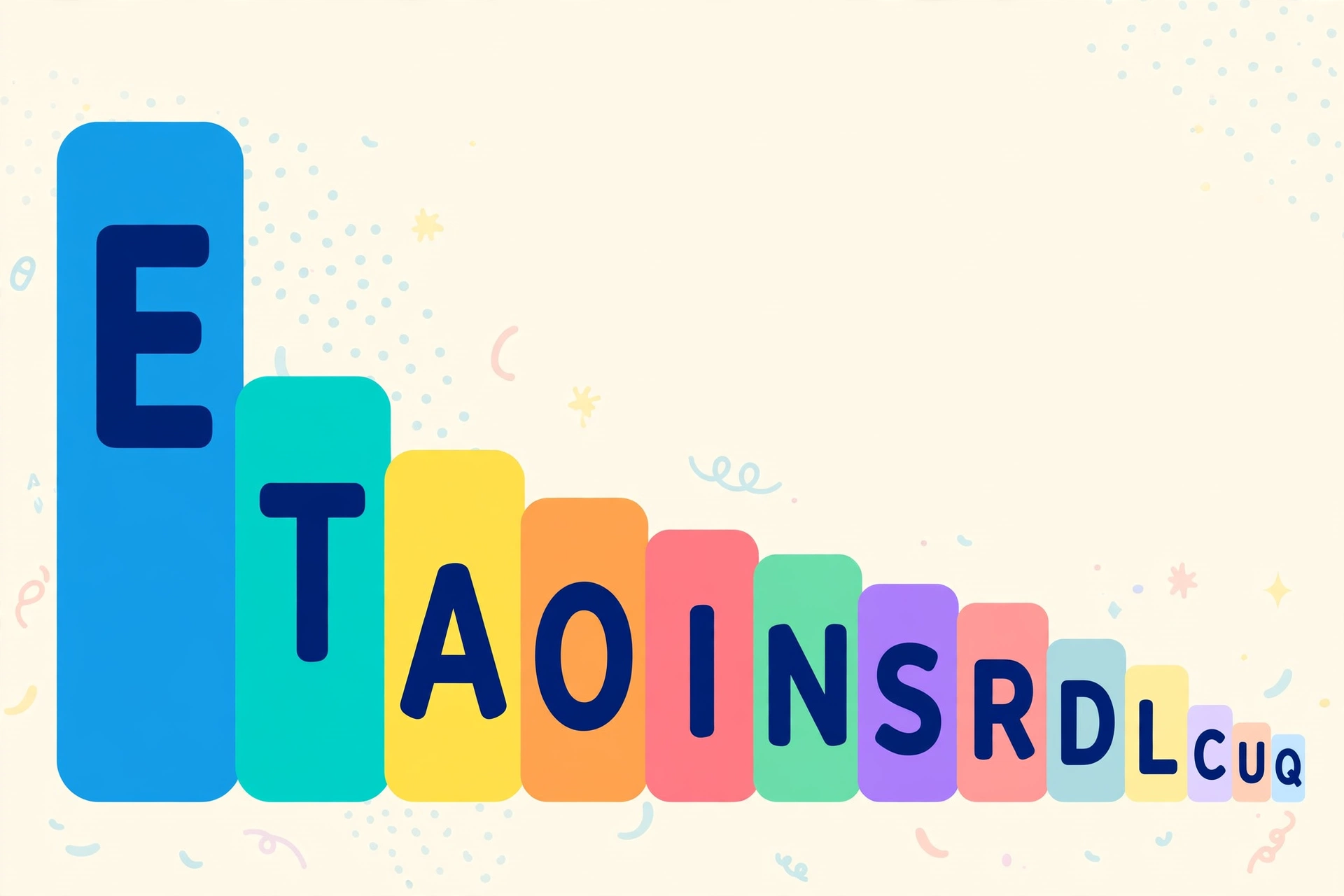
ETAOIN SHRDLU — memorizing letter frequency is a game-changer for word puzzles.
Spot Common Letter Pairs (Digraphs)
Some letters almost always appear together. These are called digraphs — two-letter combinations that form a single sound. If you can spot a digraph in your scrambled letters, you can treat those two letters as one unit and dramatically reduce the combinations you need to try.
Most Common Digraphs in English:
- TH — THE, THAT, THINK, TOOTH
- SH — SHOW, SHIP, FRESH
- CH — CHAIR, CHURCH, MUCH
- PH — PHONE, GRAPH, PHOTO
- WH — WHAT, WHERE, WHEN
- QU — QUEEN, QUICK, QUIET (Q is almost always followed by U)
- CK — CLOCK, TRICK, BLOCK
For a fuller list, see our guide to common letter patterns in word scramble games.
Rearrange Consonants Around Vowels
Once you have found your vowels (Trick #1), the next step is to try placing different consonants on either side. Think of the vowel as the center of a word sandwich — consonants go on the left side and right side.
Start with the most common consonant-vowel-consonant (CVC) pattern. Words like CAT, RUN, HIT, MAP all follow this structure. Then expand outward to CCVC (TRIP, FROG), CVCC (FAST, JUMP), and longer patterns.
Try these structures in order:
- CVC → CAT, BIG, RUN, PET
- CCVC → TRIP, BLOG, FROG, SLIM
- CVCC → FAST, BELT, JUMP, MILK
- CCVCC → TRUNK, CRISP, BLEND
💡 Pro Tip: Write the letters on a piece of paper and physically move them around. Research shows that spatial manipulation of letters activates different brain pathways than staring at them on screen — making patterns easier to see. On mobile? Use the copy button in our Word Unscrambler Tool to grab letters quickly.
Think in Word Endings First
Most people try to build words from left to right — starting from the beginning. But experienced word game players often work backwards, starting from the end of the word. Why? Because English word endings are far more predictable than beginnings.
High-value endings to try first:
- -ATE → CREATE, PLATE, LOCATE
- -ANE → PLANE, CRANE, INSANE
- -OWN → BROWN, CROWN, GOWN
- -IGHT → LIGHT, NIGHT, FIGHT
- -ALL → BALL, CALL, TALL, FALL
- -ACK → BACK, TRACK, STACK, BLACK
- -OOD → FOOD, WOOD, BLOOD
- -OOT → ROOT, BOOT, SHOOT
Use a Word Unscrambler Tool
Sometimes the fastest and most complete solution is to use a dedicated word unscrambler. When you are stuck on a particularly tricky set of letters, or when you want to see every possible word your letters can form — not just one or two — a word unscrambler tool does the heavy lifting in under a second.
Our free Word Unscrambler Tool searches a dictionary of over 125,000 words and returns every valid English word grouped by length. It works instantly in your browser with no login required — on mobile or desktop.
- ✅ Enter up to 15 letters at once
- ✅ Results grouped by 2, 3, 4, 5+ letter words
- ✅ Filter by minimum word length
- ✅ Click any word to copy it instantly
- ✅ Works on mobile — perfect for Scrabble on the go
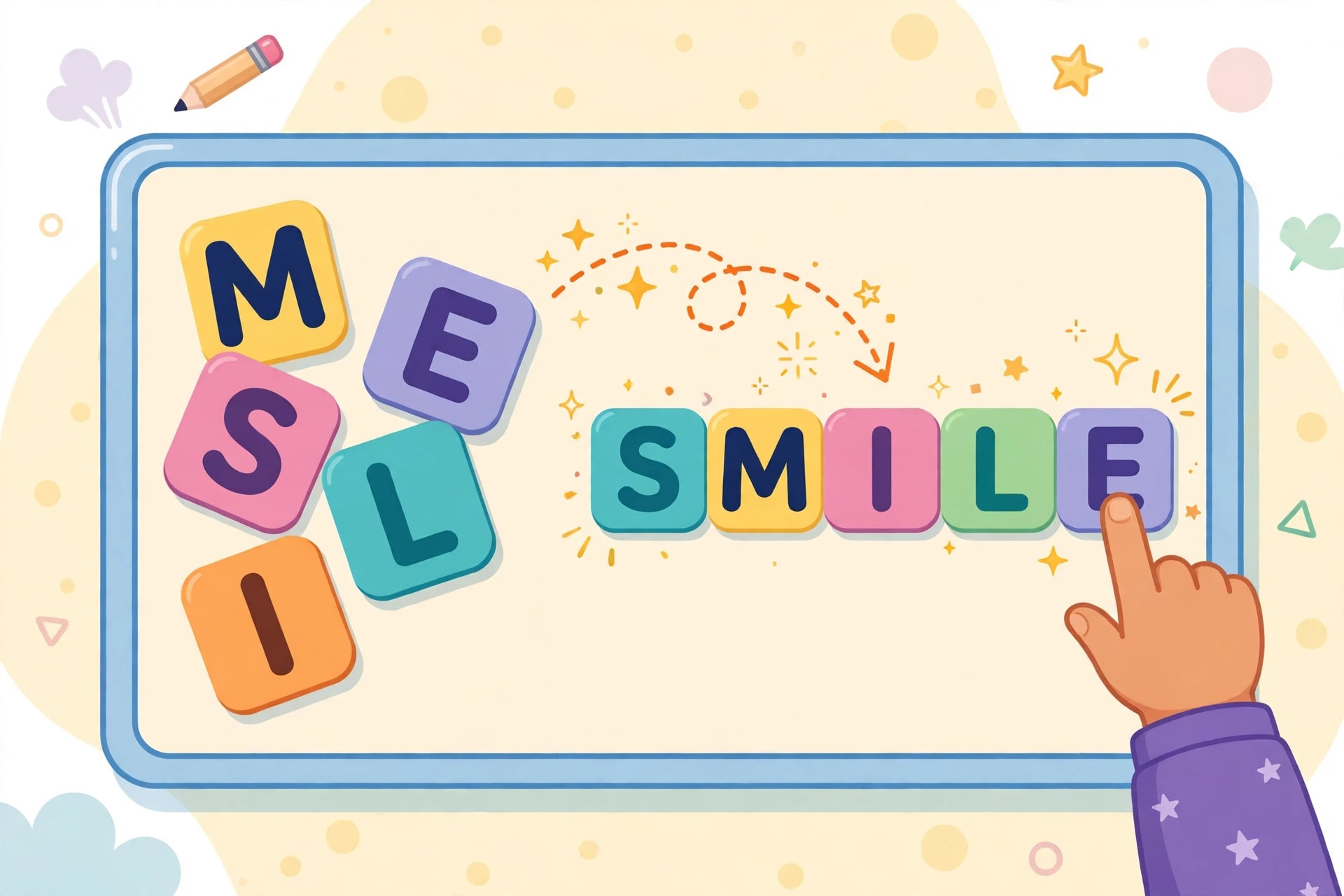
Our free Word Unscrambler Tool finds every valid word from your letters in under a second.
🔀 Ready to Try It?
Use our free Word Unscrambler Tool — 125,000+ word dictionary, instant results, no login needed.
Open Word Unscrambler →Worked Example: One Scramble Solved in Four Steps
The scramble is DREGAN and the answer is GARDEN.
- Step 1 – Separate the vowels A and E from the consonants D, R, G and N.
- Step 2 – Try a familiar ending: -EN leaves G, A, R and D.
- Step 3 – Arrange the remaining letters as GARD.
- Step 4 – Join GARD + EN to get GARDEN, and check that every letter is used exactly once: G, A, R, D, E, N.
When to Just Use the Solver
Using the solver is the right move when you have tried vowels, affixes and patterns for about 30 seconds with no progress, when you want every possible word from your letters rather than just one answer, or when you are playing a timed game and want to learn from the answer afterwards. In any of these cases, the word unscrambler will show you every possible word so you can learn from the answer.
Quick Summary — 7 Tricks to Unscramble Words Fast
Here is a quick recap of all 7 tricks so you can refer back to them anytime:
- Find vowels first — separate A, E, I, O, U from consonants to see the word skeleton
- Spot prefixes and suffixes — look for UN-, RE-, -ING, -ED, -LY in your letters
- Use letter frequency — build around E, T, A, O, I (the most common letters)
- Find digraphs — treat TH, SH, CH, QU as single units to reduce combinations
- Use CVC patterns — arrange consonants around vowels using known word structures
- Start from word endings — try -ATE, -IGHT, -ACK, -OWN endings first
- Use an unscrambler tool — get all possible words instantly when you are stuck
The more you practice these tricks, the faster your brain will recognize patterns automatically. Start with the Word Scramble Game on our site to practice daily — it is free, works on any device, and gets progressively more challenging.